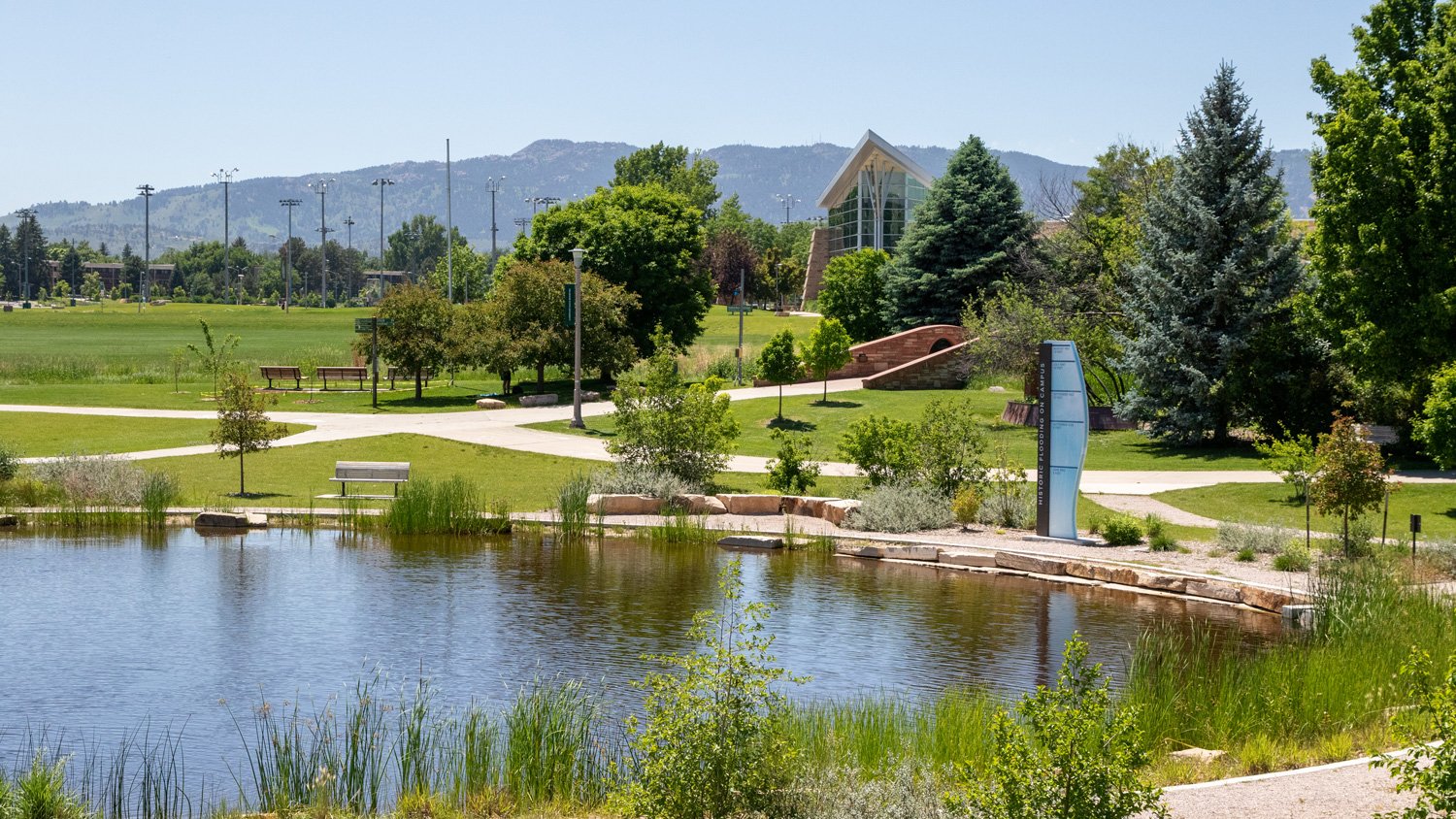
Institutional owners on the northwest edge of Fort Collins buy construction differently from plant managers, and we build for both. Colorado State University's Foothills Campus is listed at 1,705 acres (another section of the same source gives 1,438 acres) and houses the atmospheric sciences department, several research and outreach centers and the Cooperative Institute for Research in the Atmosphere. Support buildings, instrument pads, shops and utility work for a research enterprise of that kind follow a different rhythm: long planning, careful documentation and strict commissioning.
The same expertise serves private companies that work beside the university: instrument makers, environmental firms and contractors who need a shop, a lab bench or a heavy slab close to the research community. We build industrial-grade space for these users, and we keep the records that institutional partners expect.
Institutions as the largest employers
Colorado State University is the largest employer in Fort Collins with 8,850 employees, followed by the University of Colorado Hospital Authority at 5,900 and the Poudre R-1 School District at 4,600, according to the city's 2024 Annual Comprehensive Financial Report as summarized on Wikipedia. Institutions of that size need fleet garages, warehouses, central plants, maintenance shops and research support space, and they place steady demand on contractors who can handle both utility work and finish quality.
CSU's main campus covers 583 acres, including the 101-acre veterinary teaching hospital, and the university spent $498.1 million on research and development in fiscal year 2023. Such research spending often leads to spin-outs and partners who need real space. Those in pharmaceutical and life sciences look for controlled rooms and animal-safe or biosafe construction, while hospital-related users examine the same details we describe for healthcare and hospital buildings.
What the 1997 flood changed about how owners plan
A late July 1997 flash flood in Fort Collins followed 10 to 14 inches of rain over 31 hours, killed five people, caused about $5 million in city damage and about $140 million in damage to Colorado State University. Any owner who builds near the university or the foothills lives with that history. Research equipment, data and samples are sensitive to water in ways that ordinary inventory is not, so floor elevations, drainage paths and equipment placement receive more attention than they would elsewhere.
We design site grading so that runoff crosses the lot and leaves it without passing the building, keep sensitive equipment above likely water levels and route power and communications in sealed conduit. Our work on underground electrical duct banks includes watertight joints and drainage at low points, since a duct bank that fills with water becomes a liability the day it is energized.
Which review applies, and who signs off
Work on university property can follow the institution's own review and standards in addition to, or in place of, the city's, so we ask at the start which authority governs and obtain its design guidelines. Off-campus parcels follow the city: Fort Collins treats the 2024 International Building Code with local amendments as current for permits submitted on or after April 1, 2026.
Institutional owners also expect formal commissioning, clear submittal procedures and written closeout documents. We build those into the schedule and the staffing from the first day, with a record of every request for information, change and test result, so that when the owner's facilities staff takes over the building they know what is in it and where it came from.
Support buildings, platforms and equipment pads
Typical scopes include a shop or storage building, a lab support structure, an equipment yard and the pads for instruments or generators. Inside, research and testing equipment often needs platforms to reach tall instruments or piping, and we build them under the scope described in mezzanines, catwalks and platforms, using engineered steel with guards and stairs that meet code.
The site package is an equal share of the work. Utilities extend from campus mains, roads and parking adjust to the new building, and the yard gets lighting and security that match institutional standards. We plan the construction around the academic calendar when work is on campus, scheduling noisy and disruptive tasks when students and researchers are least affected.
The northwest edge and the roads into the foothills
The Foothills Campus lies on the northwest edge of the city, and from there our work extends to nearby communities. Laporte lies along the Cache la Poudre River where it leaves the foothills, and Bellvue sits in a narrow valley at the mouth of Rist Canyon, partly inundated by Horsetooth Reservoir. Both areas have narrow roads, river-adjacent ground and limited utility service.
For energy and testing users who want a different setting, the Powerhouse Energy Campus north of Old Town serves a similar research community in a more urban location. We describe the practical differences in access, utilities and permitting so owners choose the setting that matches the work.
Share the program and who governs the site
Tell us whether the parcel is on campus, who reviews the work and what equipment the building will hold. We will return a plan with the review path, documentation needs and a realistic schedule.
Common Questions
Does university property follow the city building code?
Not always. Work on university land can follow the institution's own review and design standards, sometimes in addition to the city's. We ask the owner at the start which authority has jurisdiction, obtain its guidelines and design to them. For private parcels near the campus, the Fort Collins code applies, currently the 2024 International Building Code with local amendments for permits submitted on or after April 1, 2026.
What did the 1997 flash flood mean for building near the foothills?
It showed how quickly intense rain can overwhelm drainage. The storm followed 10 to 14 inches of rain over 31 hours and caused about $140 million in damage to Colorado State University. Owners should look closely at drainage, floor elevations and where water goes when a channel overflows. We design for the path of water through the site as well as for the building.
How do you protect research equipment from water during construction and operation?
During construction, we close the envelope early and protect open areas with temporary covers and drainage. In operation, the building has raised pads, sealed conduits and floor drains placed away from sensitive equipment. We review equipment elevations with your team and move them if a better location exists.
Can you build around the academic calendar?
Yes. We plan noisy and disruptive tasks for breaks, schedule deliveries outside class changes and keep pedestrian routes safe and open. Utility shutdowns are scheduled with the facilities department weeks ahead. The calendar becomes an input to the schedule, not an obstacle.
Which documents will a campus-area owner expect at turnover?
Expect as-built drawings, equipment manuals, warranty letters, test and balance reports, commissioning records and a list of every product installed. Research owners often add instrument calibration and sign-off records. We assemble the closeout set as the work progresses, not at the end, so that missing items show up while the trades are still on site and can be fixed without a return trip.
Related
Related Services
Related Service Areas
Ready to talk about your project?
Request a Project ReviewOne project team for the whole sequence
Industrial Contractors of Fort Collins reviews the site, the loads, the schedule and the approvals before pricing, then schedules, coordinates and inspects the specialty trade partners from preconstruction through closeout.