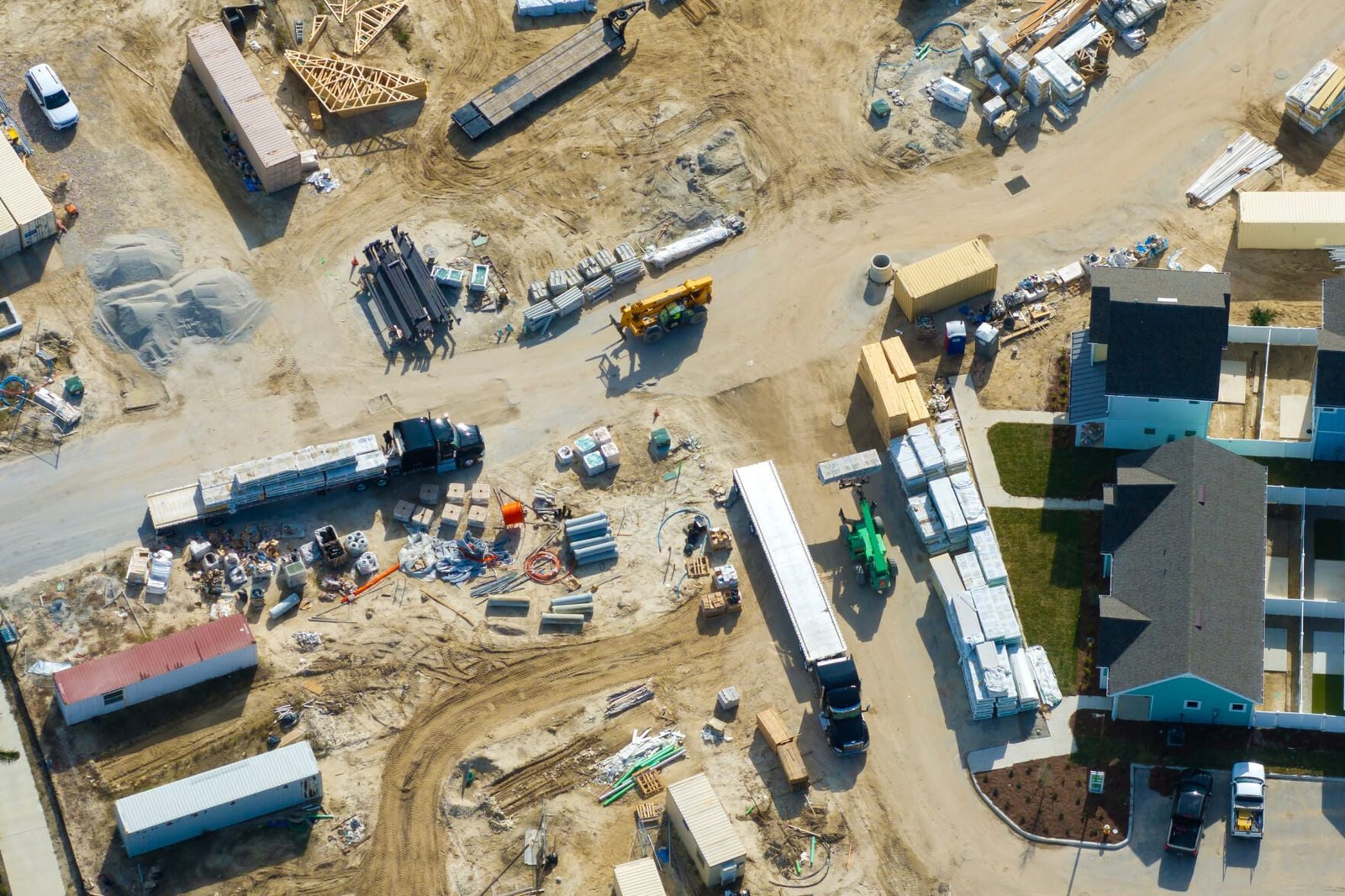
Forklift traffic does not stop because a trench is being cut thirty feet away, and a plant that cannot ship for a week usually loses more than the work being done is worth. Phased construction on an occupied site is the discipline of building next to, above or inside a working facility while production, shipping and safety carry on as normal.
We plan these projects around the operation, not around our own convenience. The first meeting is with the plant manager and the safety lead, not the design team, and the first drawing is a logistics plan showing where trucks, forklifts, pedestrians and construction equipment will travel. Shutdowns for tie-ins to power, water, gas or process lines are set on the owner's calendar, usually in planned maintenance windows or on weekends.
The scope can be an expansion wall, a new dock, a mezzanine, a process line upgrade or a utility replacement. The method is the same each time: define the work zone, protect the people outside it, and prove every tie-in on paper before it happens in the field.
Keeping two operations apart
Separation comes first. Hard barriers, dust containment, controlled entrances and dedicated haul routes keep construction traffic away from production traffic. Where work touches food, pharmaceutical or other sensitive product areas, we add protocols for dust, odor, noise and tool control and agree on the owner's quality requirements before mobilizing. Our trade partners are briefed on the plant's own rules, including lockout and tagout, hot work permits and emergency assembly points.
Communication keeps the barriers meaningful. A short daily coordination note tells the operations team what is happening in each zone, what has changed and what is planned for the next shift. If a shipment arrives that conflicts with a crane pick, one phone call resolves it. Nothing replaces that daily contact, and we keep it going until the last barrier comes down.
What phased scopes usually include
Typical phased work includes building additions that tie into existing walls, new loading docks and aprons, roof replacement over active areas, new process lines inside existing bays and site utility replacement under active yards. Each has a different disruption profile. Roof work disturbs dust and weather protection, slab work disturbs traffic, and utility work can interrupt production if a tie-in fails.
We separate the work that can proceed in advance from the work that requires a shutdown. Prefabrication, staging and pre-assembly happen off the critical path wherever possible, so the shutdown itself is only the tie-in. A well-planned tie-in is mostly rehearsal: materials staged, crews briefed, valves and switches identified, and a rollback plan if something does not behave. Our approach to dock aprons and loading zones shows how we handle one of the most common occupied-site scopes.
What campuses built in stages teach
Woodward's Lincoln Campus in Fort Collins, with first two phases totaling 363,320 sq ft at about $134 million on a 101 acre site, shows why phasing is a design question as well as a construction one. Utilities, roads and parking for later phases have to be sized and routed in phase one, or the campus pays for rework while people are working in it.
Rail and truck access create similar constraints. Freight rail service in Fort Collins is provided by Union Pacific and BNSF, and a plant with a rail spur has to keep that spur serviceable during construction. A trailer yard at a distribution center needs the same continuity, which is why we write the construction plan as part of the operating plan and review it with the people who run the dock.
Shutdowns, weekends and weather
We begin with preconstruction and build the schedule around the operation's quiet periods. Many plants have a planned shutdown once or twice a year, and the long utility work should be timed for those windows. Where no long shutdown exists, we split the tie-in into shorter outages on weekends or overnight, with every step written, reviewed and timed. The related work in industrial renovations and modernization follows the same pattern.
Weather matters in Colorado. A roof opened in November faces freezing nights and snow, and a slab placed inside a partly enclosed bay needs temporary heat. We schedule envelope work to avoid exposing production to the elements and we maintain temporary protection until the permanent enclosure is complete.
Operations that most often need phasing
Large operating facilities vary. A process plant such as Leprino Foods' Greeley cheese plant, designed around more than 7 million pounds of milk per day, cannot pause its intake, so any construction inside it follows the production cycle. Food and beverage producers raise the highest sanitary standard on this kind of work, and logistics operators raise the heaviest traffic constraint.
Manufacturers fall between the two: their lines can often be stopped for hours but not days, and their utilities are shared across several buildings. We study the operation first, then decide which parts of the project are safest to build live and which should wait for a shutdown. The answer is written into the schedule and reviewed with the owner before any crew mobilizes.
Plan the shutdown before you plan the work
Describe the operation, the work zone and the windows you can give us. We will return a phasing plan that protects production and shows each tie-in in order.
Common Questions
How do you protect product and people in an operating plant?
With physical separation, controlled access and agreed protocols. Barriers and dust containment isolate the work zone, haul routes keep trucks away from production traffic, and everyone on our site follows the plant's lockout, hot work and emergency procedures. For food or pharmaceutical product areas we add specific protocols for dust, odor and tool control that we agree with your quality team before work begins.
Who decides when a shutdown happens?
You do. We propose the shortest practical shutdown, with a written step-by-step plan, and you place it where it hurts production least. If the plan cannot be done in the time available, we say so ahead of time and look for a different sequence, such as temporary service or prefabricated connections.
Can we keep shipping from the docks we are expanding?
Often yes, by phasing the dock work so some doors stay in service. It requires a temporary traffic plan, protected paths for pedestrians and sometimes temporary leveling equipment. We lay out the options on a plan so you can see the doors in service at each stage.
Does phased work cost more than building on an empty site?
Usually yes, because of barriers, off-hours labor, protection and slower production. It can still cost less than a shutdown of the whole operation. We show the premium as a separate item so you can compare it with the cost of lost production.
What does a phased certificate of occupancy involve?
The building department must accept that part of the building is complete and safe while the rest is under construction. It requires fire separation, protected egress and working life safety systems in the finished area. We raise this early with the jurisdiction so the schedule includes the inspections it needs.
Related
Related Services
Related Building Types
Related Industries
Ready to talk about your project?
Request a Project ReviewOne project team for the whole sequence
Industrial Contractors of Fort Collins reviews the site, the loads, the schedule and the approvals before pricing, then schedules, coordinates and inspects the specialty trade partners from preconstruction through closeout.