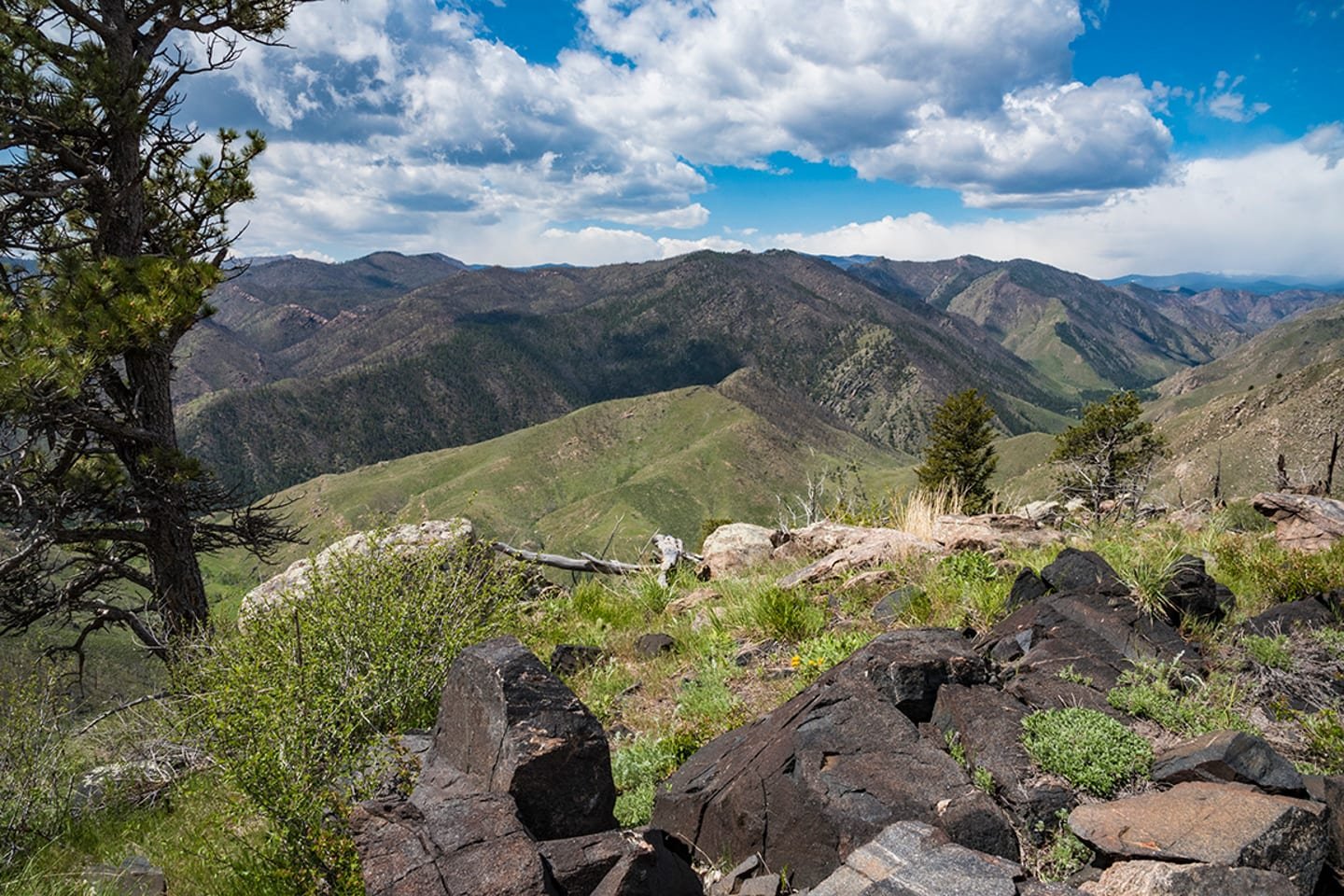
The first drawing on a Laporte site is the river. The Cache la Poudre leaves the foothills here, northwest of Fort Collins, and a builder who understands where the water goes in a wet year can make a modest industrial parcel work, while one who does not can build something that floods. We design and build shops, storage buildings, contractor yards and light industrial facilities in Laporte with drainage, grade and elevation set from that starting point.
Laporte is an unincorporated community, about 6 miles northwest of Fort Collins, with US 287 along its northern edge and State Highway 14 also listed as a major highway. It sits at 5,109 feet on 6.224 square miles and had 2,409 residents in the 2020 census, down 1.7 percent from 2,450 in 2010. A small, stable community with highway frontage tends to attract the practical, low-profile buildings that serve contractors, landscapers, equipment operators and small manufacturers.
The land use there is shaped by the river, not by a development boom, and our approach is conservative by design: confirm what the parcel can legally hold, confirm what the ground and the water allow, and then build the simplest durable structure that meets the need.
Working Beside a River
Construction near flowing water carries its own safety plan. Excavations close to the river can fill quickly after a storm in the mountains, and the Poudre rises with snowmelt and rain well upstream of the site. We monitor the forecast during the work, stage fuel and chemicals well above the high-water line, and set a procedure for moving equipment and materials out of the low ground if the river rises.
Erosion and sediment control protects the river as well as the work. Silt fence, inlet protection, stabilized construction entrances and prompt seeding of disturbed ground are part of every project near the channel, and we inspect them after each significant storm.
Shops, Yards and Storage in the Poudre Corridor
The typical Laporte project is a steel shop with a concrete slab, an overhead door or two and a graveled or paved yard. We build these as pre-engineered metal buildings on conventional foundations, and for yards that need to carry loaded trucks we add a stabilized base through our stabilized laydown yards work.
Where the owner needs fenced security, lighting and controlled gates, we install them with the building so the site is usable the day the shop opens. A small building often depends more on its site than on its structure: the grade, the drive, the drainage and the fence decide whether it works.
Sequencing Around Runoff Season
A river that is fed by mountain snowmelt has a predictable seasonal rhythm, with the highest flows in late spring and early summer. We prefer to complete excavation, drainage structures and any work near the channel in the lower-flow months, and to leave the building erection and interior finishes for the periods when the ground is stable. That sequence keeps open excavations from standing in water and keeps stored materials out of harm.
The order of work matters on a small site, too. Drainage and the access drive come first so that deliveries do not rut the lot, the slab and steel follow, and the yard base and fencing are completed last so that construction traffic does not damage them. A two-building project can often be handled in a single season if the permits are in hand.
What the River Has Done Before
The Cache la Poudre is 126 miles long, rises in Rocky Mountain National Park, passes through Poudre Canyon and Fort Collins, and joins the South Platte River about 5 miles east of Greeley. An 1864 flood destroyed Camp Collins at La Porte, and periodic flooding from the river continues. A long record of floods is a reason to take mapping seriously, not a reason to avoid the area.
We begin with the floodplain mapping and the local floodplain administrator. Building in or next to a mapped floodway can be restricted or impossible, and a building in the broader floodplain typically has to be elevated or floodproofed. Our stormwater detention and drainage design keeps a site from adding runoff to a river that already runs high in wet years.
County Review and a Code Edition to Confirm
Because Laporte is unincorporated, a project there is generally reviewed by Larimer County. We were not able to verify the county's adopted commercial code edition from an official source, so we confirm it with the building department at the start of each project rather than assuming a particular edition. Colorado leaves building codes to individual counties and cities, so a neighboring parcel inside the Fort Collins limits can be under different rules.
The state's energy requirement under HB22-1362 applies wherever a body has updated its code on or after July 1, 2023, and the benchmark moves to the state low energy and carbon code on July 1, 2026. Floodplain permits, grading permits and access permits from the state or county on the highways add their own review periods, and we line them up in a single schedule through our permitting and entitlements coordination.
Between the Foothills and the City
Laporte is part of a corridor that reaches from the foothills into Fort Collins along US 287. Work there draws on the same crews and suppliers as the city, which makes mobilization short. Owners with needs in more than one place can also look at Bellvue to the west, a canyon-mouth community with its own site constraints.
For companies that supply metals and heavy industry or the equipment trades, a parcel with highway frontage and a modest building often beats a larger site in an industrial park. We help owners weigh the two.
Send the Parcel and the Floodplain Map
Share the parcel number and what you plan to build. We will check floodplain status and access and return a site layout with a price.
Common Questions
How do we know if a Laporte parcel is in the floodplain?
Ask the Larimer County floodplain administrator for the mapping, and have a surveyor show the mapped limits and the base flood elevation on the site plan. We use the same information to set the floor elevation and the grading of the yard before anything is drawn.
Can we build a shop right next to the river?
Sometimes, but the setbacks, floodway restrictions and environmental reviews narrow the choices. A site set back from the channel and elevated above the base flood level is a far easier project. We review the options before an owner commits to a parcel.
What approvals does an unincorporated Laporte project need?
Generally a county building permit, a grading and drainage review, an access permit where the driveway connects to a state or county road, and a floodplain permit if the parcel is mapped. We list each in a single approval schedule at the start.
Do foothill-edge soils need special foundations?
They can. The ground near the foothills may include gravel, cobble and variable bedrock depth, which affects excavation and foundation design. A geotechnical report, taken early, tells us what to expect and what the footings should be.
Related
Related Services
Related Service Areas
Ready to talk about your project?
Request a Project ReviewOne project team for the whole sequence
Industrial Contractors of Fort Collins reviews the site, the loads, the schedule and the approvals before pricing, then schedules, coordinates and inspects the specialty trade partners from preconstruction through closeout.