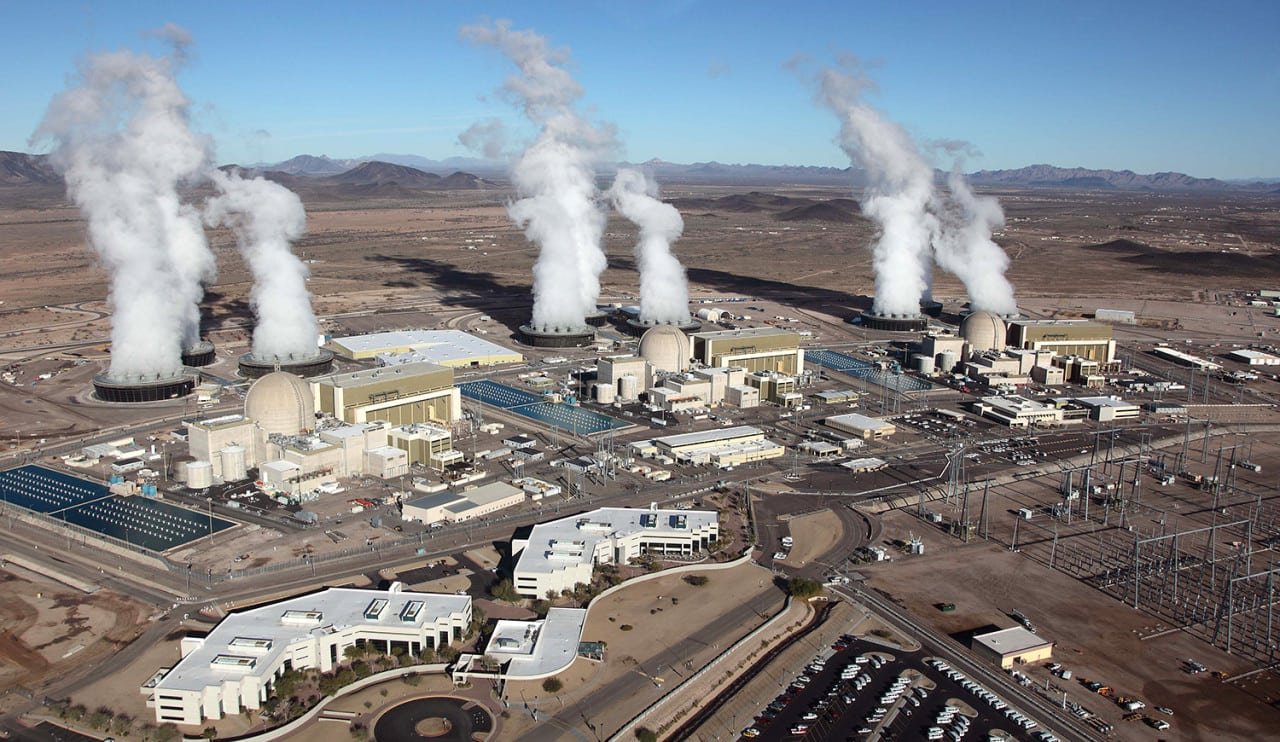
Substations, pump stations and generation yards sit where the grid and the water system need them, and that is rarely where construction is easy. The ground may be a floodplain, the access road may be a canyon highway, and the existing equipment next door must stay energized while new work goes in. We build utility and power infrastructure for municipal systems, cooperatives, developers of energy projects and industrial owners who need their own electrical or water capacity, and we plan around the live system first and the schedule second.
Northern Colorado offers a particular mix of utility settings. Colorado State University's Powerhouse Energy Campus north of Old Town Fort Collins is a 100,000 square foot facility that hosts the Energy Institute and, among its 26 labs and research groups, the Grid Modernization Initiative, microgrid components, solar photovoltaic testing and hydrogen and electric vehicle testing. On the water side, Horsetooth Reservoir west of the city holds 156,735 acre-feet behind four earthen dams. These are places where power and water infrastructure are treated seriously.
The utility work we build
Our work for utility and power owners falls into a few categories. Site preparation and grading for substations and equipment yards come first, then foundations for transformers, switchgear enclosures, control buildings and tank structures. After that, the underground work: duct banks, manholes, pull boxes and ground grids. We also build access roads and laydown areas with surfaces matched to heavy equipment transport.
Two services support most of these projects. The trade partners for electrical duct bank and underground build concrete-encased conduit banks to the utility's standard, and the trade partner team for equipment pads and foundations places the large concrete elements that carry transformers and process equipment. Both require close coordination with the owner's inspector and the equipment manufacturer.
Grid, water and generation in the Poudre and Big Thompson basins
The Powerhouse campus is only one point on a map of energy activity. Vestas announced in February 2021 that Windsor would take over wind turbine blade production, with about 150 added jobs expected, and the Great Western Industrial Park lists Front Range Energy and Halliburton among its tenants. Together these illustrate how energy manufacturing and services concentrate near rail and highway corridors.
Colorado's HB22-1362 influences the other side of the market, since it requires any county or municipality updating its building code on or after July 1, 2023 to adopt an energy code with equivalent or better performance than the 2021 IECC and the state model electric and solar ready code. Buildings with on-site solar, battery storage or electric vehicle charging will be designed with that in mind. For owners adding charging to a fleet yard, our automotive and EV page covers related site issues.
Working near energized equipment and open water
Safety on a utility project begins with the energized systems around the work. We conduct pre-job briefings, mark exclusion zones, confirm clearances for cranes and excavators, and follow the owner's switching and lock-out procedures. Excavation near buried lines requires potholing and utility locates before machines start digging, and we do not shortcut that step.
Water adds another layer of risk. Construction in or near river corridors or reservoirs requires erosion control, dewatering plans, spill prevention and, in many cases, state or federal permits. The Cache la Poudre River is 126 miles long and joins the South Platte about 5 miles east of Greeley, and an 1864 flood destroyed Camp Collins at La Porte, a reminder that the river corridor can change quickly. We watch the forecast and keep the site ready for storm events.
Flood history, freeboard and permitting
Four days of heavy rain in September 2013 flooded Loveland along the Big Thompson River, closed roads and collapsed sections of US 34 toward Estes Park. Estes Park now has a required freeboard standard of one foot, and a post-2013 flood report noted that every building with structural damage, including one that was destroyed, was outside the mapped floodplain. For a utility owner, that suggests designing above the minimum and placing critical equipment with margin.
Permitting varies by jurisdiction and by project type. Fort Collins treats the 2024 International Building Code with local amendments as current for permits submitted on or after April 1, 2026; control buildings and other occupied structures follow it, while the electrical and civil components follow utility and agency standards. We map the approvals required for each project at the beginning so no agency is surprised by a late submission.
Managing the dig, form and pour
Utility owners value close control of the underground and concrete trades because those trades set the pace. We schedule and inspect the excavation, forming, reinforcing steel and pours for the foundations and duct banks, and we coordinate the surveying for layout. Managing these trades as one sequence means a change in the field can be worked out the same day.
We also bring the site package: grading, drainage, roads and fencing. A utility yard needs to drain, resist erosion and stay secure, and our stormwater detention and drainage work handles the first of those. Utility owners who serve large industrial customers will also find our data center page useful, since the electrical service questions are similar.
Decisions that shape a utility project
Utility projects hinge on outages. The shorter the outage window, the more preparation is needed beforehand, and the more important it is to stage materials, pre-assemble components and rehearse the switching plan. We build outage sequences with the owner's operations staff and hold them to the plan on the day.
Heavy equipment delivery is the other concern. Transformers and large process vessels can weigh many tons, and the route from the highway to the pad needs to carry them. Our heavy haul access roads work covers those routes. Industrial owners planning large fabrication or processing installations can compare these considerations with metals and heavy industry projects, which share the same demand for heavy foundations and haul routes.
Planning a substation, yard or utility upgrade?
Tell us the equipment, the outage windows and the site constraints. We will respond with a sequence, a foundation and underground scope, and a budget range.
Common Questions
Can you work inside an energized substation or yard?
We work in energized yards under the owner's safety rules, with clearances, exclusion zones and a designated safety watch where required. Outages are scheduled with the owner's operations staff, and any work close to energized equipment is planned in advance. We do not begin work in a live area until the owner's representative has signed off on the plan.
How do you handle foundations for large transformers?
We build them to the manufacturer's weight, dimension and anchor bolt layout, with containment and grounding integrated into the design. The pad is poured and cured before delivery, and we verify elevations and bolt positions with survey before the equipment arrives.
What flood considerations apply in northern Colorado?
Rivers such as the Cache la Poudre and the Big Thompson have flooded severely in the past, so owners should design with margin above mapped floodplain elevations and keep controls and electrical equipment high. Estes Park, for example, now requires one foot of freeboard. We review floodplain and drainage conditions at the start of every project.
Does the new energy code apply to utility buildings?
It may. Occupied buildings, such as control rooms and offices, follow the adopted building and energy codes of the jurisdiction. Colorado's HB22-1362 sets minimum energy performance for jurisdictions updating their codes, and we confirm the applicable edition with the permit office.
Related
Related Services
Related Industries
Ready to talk about your project?
Request a Project ReviewOne project team for the whole sequence
Industrial Contractors of Fort Collins reviews the site, the loads, the schedule and the approvals before pricing, then schedules, coordinates and inspects the specialty trade partners from preconstruction through closeout.