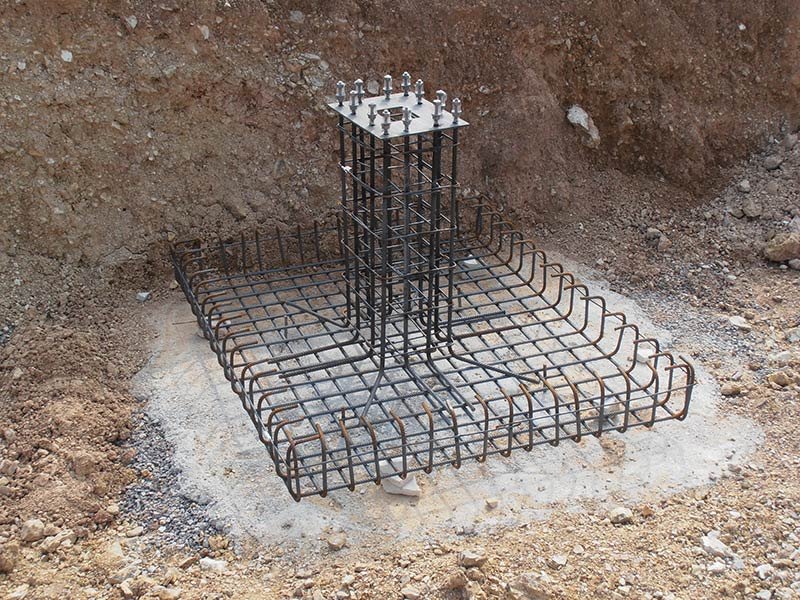
Large engines, test cells and process skids send their forces into the ground through a concrete pad, and the pad has to do more than hold weight. It has to resist vibration, keep equipment level through temperature swings, carry anchor bolts at exact positions, contain leaks and stay independent of the building slab when the machine shakes. We design-assist and build equipment pads and foundations for compressors, chillers, generators, tanks, presses, dynamometers and other heavy plant equipment, and we do it in coordination with the vendor drawings that govern them.
The northern Front Range supplies good examples of demanding equipment. Colorado State University's Powerhouse Energy Campus hosts 26 labs and research groups, with focus areas such as microgrid components, solar photovoltaic testing, large-scale engine testing and hydrogen and electric vehicle testing. Work of that kind depends on isolated foundations, trenches, embedded conduits and carefully leveled pads long before any instrument is installed.
Whether the equipment is a research engine or a production line, the principle is the same. The foundation design comes from the equipment manufacturer's loads and the geotechnical report, and our task is to build it precisely and hand it over ready for setting. Where a pad sits inside a building we coordinate it with industrial concrete floors, and where it sits outside we coordinate it with the site electrical and drainage.
The pads and foundations we build
Common scope includes inertia blocks for rotating equipment, machine foundations with embedded anchor bolts and sleeves, tank rings and saddles, chiller and compressor pads, generator and transformer pads, equipment curbs and containment, trench and sump structures, and thickened slabs under heavy loads. Many have special requirements: grout pockets, leveling plates, embedded steel, vibration isolators or thermal breaks.
We also build foundations for exterior process equipment that has to withstand wind, snow and freeze-thaw cycles. Tank farms and skid areas need containment curbs with the volume to hold a spill and a sloped floor to a sump. Because the equipment is often delivered on a vendor's date, we schedule the pad to be cured and checked well in advance, with accurate as-built survey data for the rigger.
Why precision foundations matter here
Industrial users in this metro cover a wide range of process equipment. Vestas announced in February 2021 that Windsor would take over wind turbine blade production from its Brighton factory, with about 150 added jobs expected, and manufacturing of that scale depends on heavy tooling, curing systems and material handling that rest on engineered pads. Food and beverage plants, breweries and bioscience facilities depend on pads for boilers, refrigeration plants and clean utilities.
CSU's 65,000 sq ft expansion of the Engines and Energy Conversion Laboratory on North College Avenue cost $18.5 million and shows how much of a research building's value is in its test infrastructure. The same logic applies to production plants: the equipment is the reason for the building, and the foundation is the first piece of that equipment to be built. We keep that priority in mind when we plan site access, crane picks and cure periods.
Loads, soils and engineered foundations
Equipment foundations are designed by the structural engineer from the vendor's data: operating and dynamic loads, bolt layouts, tolerances and settlement limits. The geotechnical report determines bearing capacity and whether the pad will bear on native soil, engineered fill or piers. Unincorporated Weld County adopted the 2024 International Building Code effective June 15, 2026, with engineered foundation designs required for most new structures, which signals how closely foundations are reviewed in the area.
Permits for equipment pads usually travel with the building permit or a separate mechanical or site permit. We confirm early which jurisdiction governs and whether the vendor requires an independent review. Dynamic equipment foundations may also need modal or vibration analysis by a specialist, and we integrate that work into the schedule before the pour.
Anchor bolts, lifting and containment
Anchor bolt placement is the most unforgiving task on an equipment pad. Templates are set to survey control, bolts are held rigidly in forms, and the projection, orientation and thread protection are checked before and after the pour. A bolt that is half an inch out of position can stop an installation, so we verify twice and photograph before we close the forms.
Safety on equipment pads also includes lifting plans, fall protection around deep pits, and confined space procedures in sumps and trenches. Where fluids are involved, containment must be complete and tested: curbs, sealed joints and coatings that match the chemical. For owners in pharmaceutical and life sciences and food and beverage, we pay attention to sanitary details such as sloped surfaces, coved bases and drainable pads.
Coordinating with equipment arrival
Equipment pads sit on the critical path for installation. Vendors specify minimum cure strength before loading, and some require grouting, leveling and alignment steps with their own representatives. We build the schedule backward from the rigging date, allow a float for weather and strength testing, and communicate any slip as early as possible.
Pads built outside need protection while they cure, and winter pours must be managed carefully. We also coordinate with structural steel erection when frames or platforms mount to the foundation, and with the electrical crews who need conduit stubs in specific locations. Owners at plants in Windsor or Fort Collins can use the same coordinated sequence for each new line.
Send the vendor drawings
Give us the equipment loads, bolt layout and delivery date, and we will return a foundation sequence, cure schedule and price. When your project also needs a pier-supported foundation, we can combine the work with drilled pier foundations.
Common Questions
Who designs the equipment foundation, the vendor or the engineer?
The equipment vendor provides loads, bolt patterns and tolerances, and the structural engineer of record designs the foundation to those data and the soils report. We build it and raise buildability concerns during review. For large dynamic machines, a vibration specialist may also take part.
How strong must the concrete be before the equipment is set?
The vendor usually specifies minimum strength, often a percentage of the design strength, and may require a specific cure time before grouting. We test cylinders and release the pad in writing. Rushing a pad is a common cause of cracked grout and misalignment.
Can pads be added to an existing slab?
Yes, but it requires care. We saw-cut and remove a section of slab, excavate to proper bearing, form and pour the new foundation, and connect it to the old slab only if the design allows. Isolating the new pad from the old slab is usually preferred for vibrating equipment.
What tolerance can you hold on anchor bolts?
We set bolts to the vendor's specified tolerances, which are often tight, using templates and survey control. After the pour, we verify positions and projections and record the results. Where tolerances are very tight, we use sleeves or adjustable bolt assemblies as the design allows.
How do you deal with frost and groundwater around exterior pads?
We set footings below the frost depth given by the jurisdiction, provide drained base material and keep surface water away from the pad. If groundwater is high, we plan dewatering during excavation and detail the foundation to resist uplift. These details come from the geotechnical report.
Related
Related Services
Related Industries
Related Service Areas
Ready to talk about your project?
Request a Project ReviewOne project team for the whole sequence
Industrial Contractors of Fort Collins reviews the site, the loads, the schedule and the approvals before pricing, then schedules, coordinates and inspects the specialty trade partners from preconstruction through closeout.