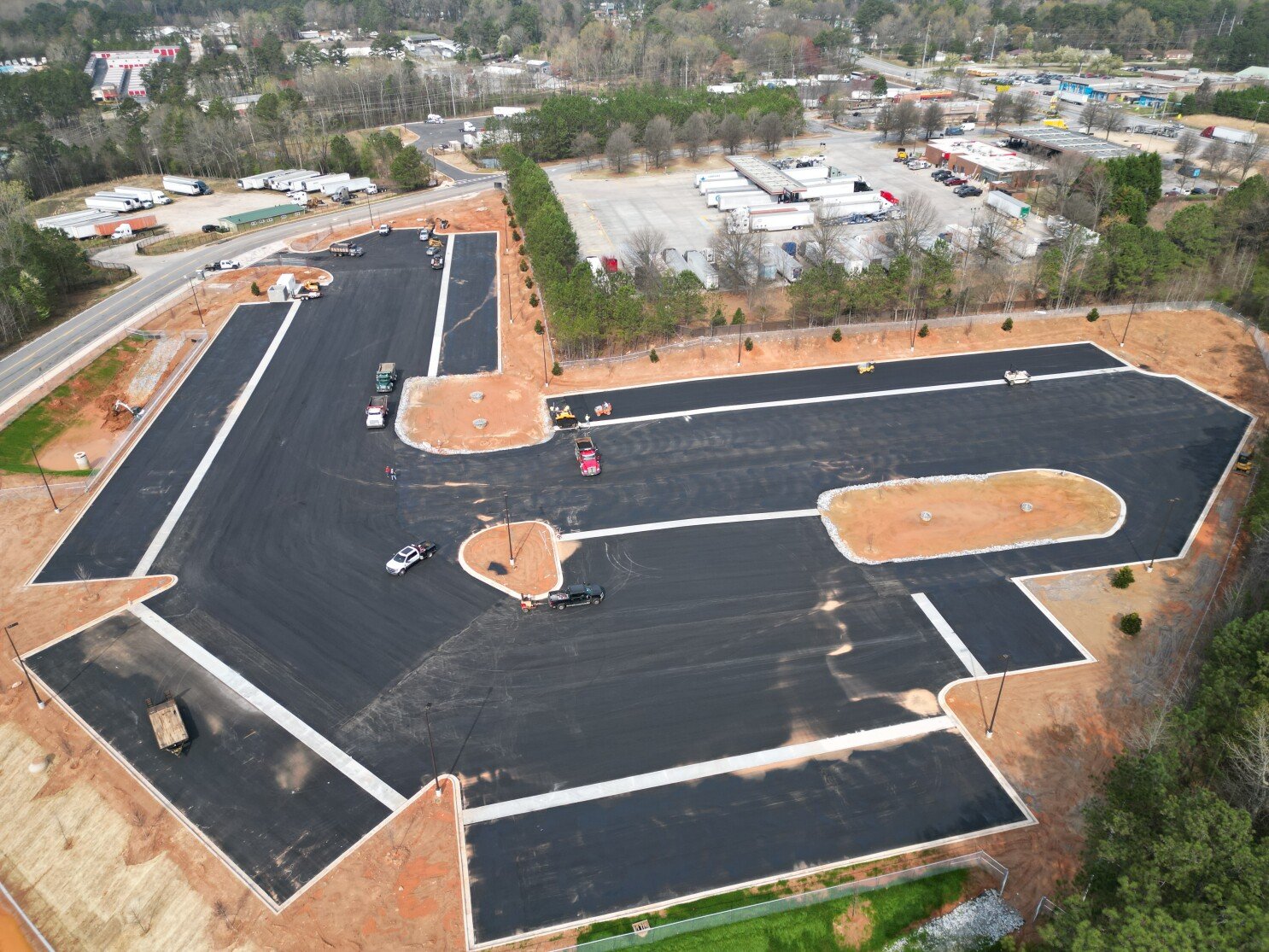
Shift change is when a plant parking lot gets tested. Several hundred vehicles arrive and leave within a quarter hour, forklifts and delivery trucks share the same entrance, and the first heavy snowfall of the season lands on a surface that has to be plowed before anyone can park. We build stabilized parking lots for industrial and process facilities with that pattern in mind: a pavement section that handles occasional truck loading, grades that shed water and meltwater away from doors, and layouts that keep employee traffic separated from freight.
The scale of employer campuses in this metro shows what is at stake. Woodward's Lincoln Campus in Fort Collins sits on 101 acres, was planned to reach 660,000 sq ft and was projected to hold up to 1,700 employees when fully built out. Parking for a campus of that size is a major piece of site work with its own drainage, lighting and circulation, and it is usually phased with the buildings so that the first occupants are not parking in a construction zone.
We approach lots as part of the whole site rather than as a final paving item. The base is coordinated with the site utilities package, the stormwater design, and the truck movements described in our work on truck courts and trailer yards, so the pavement is not cut open again a year later.
Lot construction from subgrade to striping
Our scope begins with subgrade preparation: stripping, moisture conditioning, compaction and proof-rolling. A stabilized section may use a compacted aggregate base, a lime or cement-treated subgrade where clay soils require it, or a geogrid layer where weak soils cannot be removed economically. The surface is either asphalt or concrete, chosen according to the traffic mix and the owner's maintenance preference.
Above and beside the pavement we build curb and gutter, accessible parking and routes, wheel stops, light pole bases, conduit stubs, landscape islands, signage foundations and pavement markings. Where employee lots adjoin truck routes, we install physical separation such as bollards, fencing or grade changes, not only painted lines. Each of those details is laid out in the drawings and coordinated with the civil engineer before paving starts.
Drainage, frost and approvals
Fort Collins design criteria list a 30 inch frost depth, and they set minimum ground snow loads that affect canopies and light structures near the lot. Pavement itself is designed to the geotechnical report, but the frost number shapes how we handle subbase drainage, utility trench backfill and the transition where a lot meets a building slab. A trench through a lot is a common failure point, so we compact and sample it just as we do the surrounding base.
Permits for lots run through the local jurisdiction as part of a site plan or development review. Water quality and detention requirements generally drive the grading more than the pavement thickness does, and the stormwater design often decides where the high and low points go. We read those requirements before pricing and flag any conflict between the owner's preferred layout and the drainage design while changes are still inexpensive.
Phasing a lot around operations
Plants rarely close their parking lots for a paving schedule, so we phase the work in lanes. A typical sequence builds the new section first, shifts traffic onto it, and then reconstructs the old one. We provide temporary signage, accessible routes and clear communication to the plant's safety lead before each switch, and we keep fire apparatus access open at every stage.
We supervise grading and base preparation and coordinate the asphalt or concrete placement with local paving specialists whose mixes we know. We check the base for density and flatness before paving, because reworking after paving costs more than any delay to confirm it. On campuses that expect growth, we leave the stub-outs and conduit sleeves in place for the next expansion so we are not tearing up new pavement when the next building arrives.
Seasons, shifts and the paving window
Asphalt paving in northern Colorado is a seasonal operation, and cold mornings narrow the window in spring and fall. We plan the lot so that the base and drainage are complete well ahead of the paving date, which lets the pavement go down when the weather and plant availability align. If the window closes, we protect the base through winter rather than rushing a mat into cold conditions.
Concrete lots are less temperature-sensitive but need curing time before loads return. We schedule joints, curing and opening dates around the shift pattern, and we tell the owner exactly which stalls and lanes will be unavailable on which days. For campuses linked to a manufacturing plant, we coordinate with the employer's own safety and security staff so that visitors, deliveries and employees all know where to go.
Work that connects to the lot
A lot touches several other scopes. Lighting and conduit come from our yard lighting and electrical site work, and sidewalks and accessible routes follow the practices in site concrete and ADA compliance.
On the Harmony Road corridor, a 2013 city study counted about $53 million in potential improvements and called for continuous sidewalks and buffered bike lanes. Employer lots there need to tie into that kind of public frontage, so we confirm with the owner whether future right-of-way work will touch the entrance and place curb cuts accordingly. For campuses in life sciences and bioscience, we also check how visitor and vendor traffic is separated from restricted areas, which is where fencing and security integration comes in.
Plan the lot with the building
Share the site plan and expected headcount and we will review the lot layout, drainage and phasing with you. If the lot is part of a larger program, we can also look at Windsor and Timnath parcels together.
Common Questions
Asphalt or concrete for an employee and visitor lot at a plant?
For lots that mostly see cars and light delivery vehicles, asphalt is usually the lower first cost and easier to patch. Concrete earns its place where trucks turn sharply, where fuel or fluids are common, or where the owner wants a longer interval between major repairs. We compare the two on the geotechnical report, the traffic mix and the owner's tolerance for maintenance.
Can you build a lot in phases while the plant keeps running?
Yes, and most of our lot work is phased. We build the new section first, shift traffic onto it, and then rebuild the old section, keeping fire access and accessible routes open throughout. We agree on the sequence with the plant's safety lead and notify employees ahead of each change.
How do you handle drainage on a flat site near the Cache la Poudre or South Platte?
Flat sites make every tenth of a foot of fall important, so we survey the finished subgrade and base before paving. Detention and water quality features often set the low points, and we design the lot to reach them without ponding at doors. In flood-prone areas, we also check the lot elevation against the floodplain requirements of the local jurisdiction.
What does the first winter do to a new lot?
Water in the base is the main threat. If the section drains well and trenches were compacted properly, a new lot behaves well through its first freeze. If something is wrong, it usually shows in the spring as soft spots or settling at utility cuts, and we inspect those locations after thaw.
Do you coordinate lighting and striping with the paving?
We do. Light pole bases and conduit go in before the base is finished, and striping layout is checked against the accessible stall counts and drive aisles in the approved plan. Putting these items in the same schedule prevents the common problem of cutting new pavement to run conduit.
Related
Related Services
Related Building Types
Related Service Areas
Ready to talk about your project?
Request a Project ReviewOne project team for the whole sequence
Industrial Contractors of Fort Collins reviews the site, the loads, the schedule and the approvals before pricing, then schedules, coordinates and inspects the specialty trade partners from preconstruction through closeout.