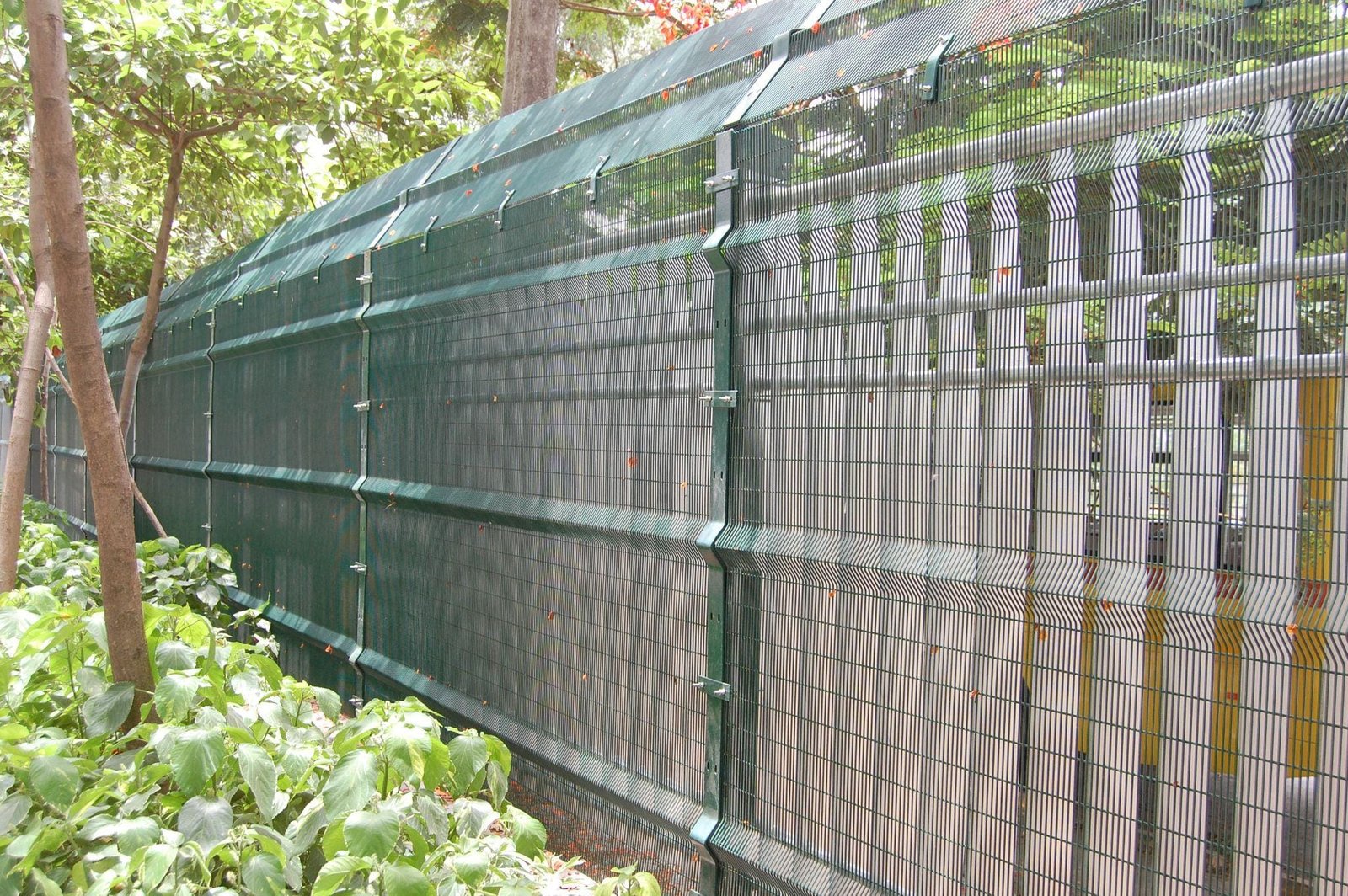
Perimeter security on an industrial site is a system of fence line, gates, lighting, cameras and access control, and each part depends on the others. A strong fence with a weak gate gets defeated at the gate; a camera pointed at a dark corner records nothing useful; a card reader that is installed after the pavement sits on a surface-mounted conduit that someone will eventually kick loose. We build the physical side of that system and coordinate it with the owner's security integrator, so that the finished perimeter works the first day it is turned on.
Industrial users along I-25 handle valuable inventory, regulated materials and expensive equipment, and their yards are often the first thing a visitor or intruder sees. A newly built 24,000 sq ft industrial building at the southeast corner of I-25 and Prospect Road comes with about 0.6 acres of fenced yard and room for about 3.5 more acres, which is a good illustration of how fenced area grows with the operation and how a fence line, once placed, gets extended.
We lay out fences with the future in mind, locating gate posts and corner posts where an extension will tie in cleanly. We also coordinate with yard lighting and electrical site work and with the paving crews so that foundations, conduits and loops are in the ground before the surface is finished.
What the perimeter package includes
Fencing is chosen by risk and by appearance: chain link with privacy slats for utility yards, ornamental steel at visible frontages, welded wire or high-security mesh for sensitive areas, and precast or masonry walls where noise or visual screening is also needed. Gates include swing, sliding and cantilever types, with operators, safety edges, loops, photo eyes and manual release provisions. Pedestrian gates and turnstiles control employees and visitors.
Electronic security runs through conduit we install: card readers, intercoms, license plate cameras, perimeter cameras, intrusion detection and the cabling that connects them to a security room. Bollards and crash-rated barriers protect entrances and equipment, with concrete foundations designed for the vehicle weights expected. We also build guard houses, vehicle inspection canopies and truck scale approaches that tie into the gate layout.
Where fenced perimeters earn their cost
Fenced yards are most valuable at facilities that move goods by truck. A distribution center needs controlled truck entry and a trailer yard with its own gate; a truck terminal or cross-dock may need a guard house and an inspection lane; a self-storage facility has public-facing gates that run constantly. Plants with hazardous materials may need a perimeter that is both a security barrier and a containment boundary.
In Wellington, the planned Wellington Business Center at 3997 Water Lily Drive is described at more than 95,000 sq ft of commercial space, with a 36,000 sq ft, 14-unit first phase and an I-25 exit about a three-minute drive away. Small-bay and contractor-style buildings like that often depend on a shared fenced yard and gate, and the same applies to other parks across Wellington and its neighbors.
Designing the gate first
We begin by studying the gate, because the gate is where the system succeeds or fails. Truck queues should be sized so that a full trailer waiting to enter does not block a public road, which means setting the gate back from the roadway a full trailer length plus an allowance. Operators and controls should match the traffic pattern: a high-use gate needs a heavy-duty operator and a backup, while a seldom-used one can have a lighter unit.
From the gate we work outward along the fence line, locating posts to avoid utilities, drainage swales and future building pads. Footing depth is set according to the soils, frost and wind exposure, and posts are plumbed and braced during the pour. We install the conduit for each camera, light and reader before any final surface goes down, and we leave pull strings and tags so the integrator can find every run.
Setbacks, sight lines and approvals
Fences are regulated by zoning as well as building code. Height limits, setbacks, materials and screening requirements vary by municipality and zoning district, and a plant on the edge of a town may face different rules from one in an industrial park. Windsor's Great Western Industrial Park, a 3,000-acre master-planned park with sites from 5 to 200 acres, shows how many different tenant types share a district, and the park's own covenants may add design requirements to those of the town.
Gates over a certain size, and anything with electrical or fire-department access, may need separate review. We provide fire department key boxes or other access provisions as required, coordinate with the fire authority on emergency entry, and confirm that security hardware does not obstruct egress. Wherever a fence crosses an easement or irrigation ditch, we obtain the necessary permission before setting posts.
Sequencing fences, gates and electronics
Fence and gate work is usually the last site item to finish and the first the owner wants to use. We stage materials early, because operators, access control hardware and special panels can have long lead times. We then set the footings and conduit as soon as the surfaces allow, and we set posts and panels once final grades are in.
Commissioning takes longer than most owners expect, since gates, readers, cameras and the network have to be tested together. We schedule time with the integrator and the owner's security staff before turnover, and we keep a punch list of every adjustment. A fenced yard for an ecommerce fulfillment operation or a manufacturer in Windsor should open with its gates working, its cameras recording and its staff trained.
Plan the gate before the fence
Send us your site plan and the security requirements and we will propose a perimeter, gate arrangement and conduit layout. Owners who also need truck areas can combine this scope with truck courts and trailer yards to build both in one sequence.
Common Questions
How tall should the fence around a trailer yard be?
Common heights run from six to eight feet, with barbed or razor wire where zoning and risk allow. The right choice depends on what is stored, the neighborhood and local rules. We review the zoning code before design and propose options that satisfy both security and appearance.
Can I add cameras and access control after the fence is built?
You can, but it is more costly if conduit and power were not provided. We recommend installing conduit, pull strings and power at each likely device location during construction, even if the devices will be bought later.
What does a gate need to be compatible with fire department access?
Fire authorities typically require a method to open the gate without tools or power, such as a key box or a switch. They also set minimum clear width. We confirm the requirements in review and install the hardware in time for the final inspection.
How do you protect gate operators and posts from truck strikes?
Bollards, curbs and guard posts keep trucks off equipment. We place them where the swept path indicates trailers will track, and we make the foundations deep enough to resist impact. A gate that is hit often is usually one whose approach was drawn too tight.
Do you coordinate with our security integrator?
Yes. We meet the integrator before conduit is placed, confirm device locations and cable types, and leave clear marking on all runs. We then give them access to complete installation and commissioning.
Related
Related Services
Related Building Types
Related Service Areas
Ready to talk about your project?
Request a Project ReviewOne project team for the whole sequence
Industrial Contractors of Fort Collins reviews the site, the loads, the schedule and the approvals before pricing, then schedules, coordinates and inspects the specialty trade partners from preconstruction through closeout.